pH
Mounting
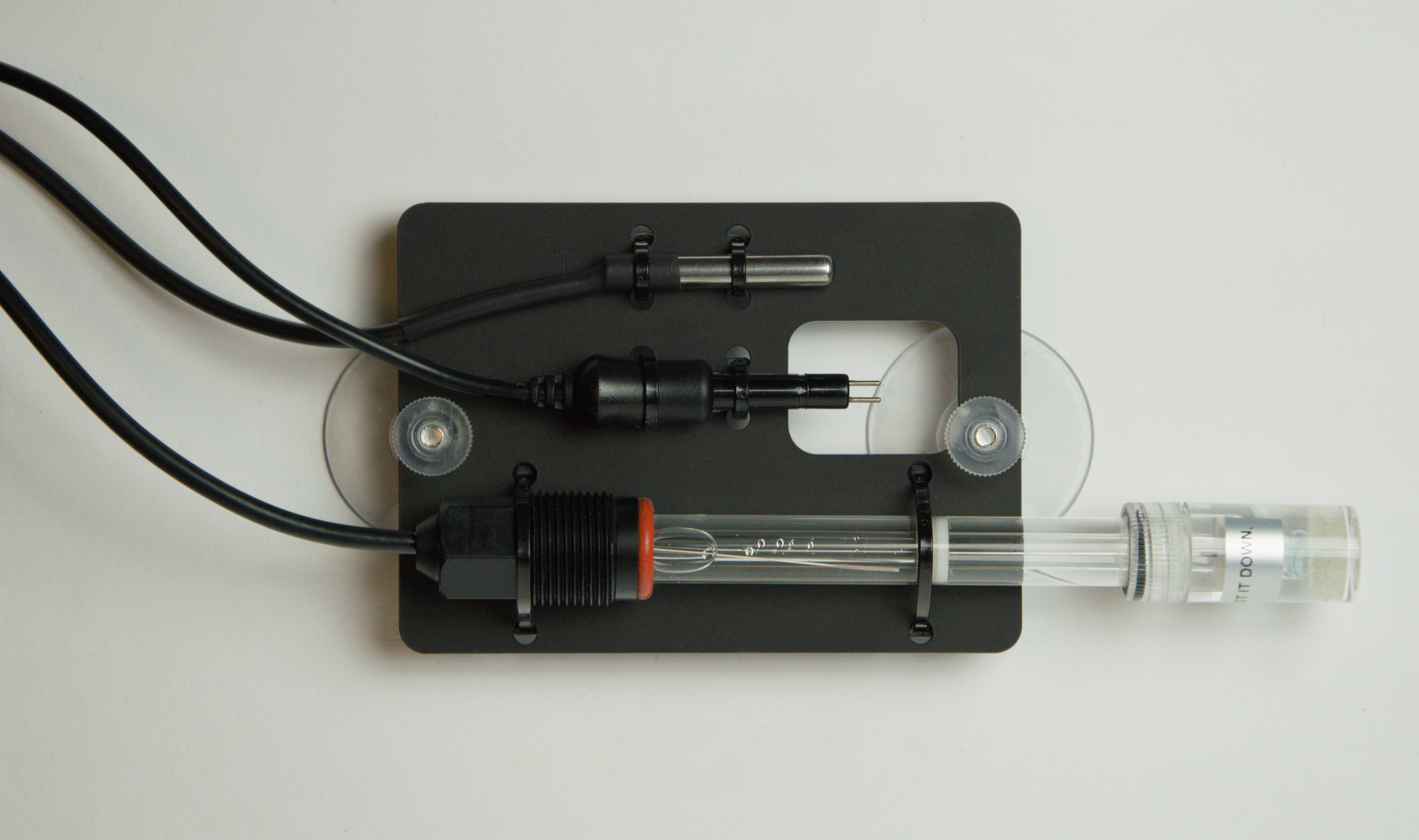
The pH sensor can be mounted using the sensor platform.
ESD protection of the BNC connector
The pH sensor connects to the device through a BNC connector. The input circuit behind the center pin of this connector is sensitive to electrostatic discharge (ESD) and may be permanently damaged by an ESD strike.
Do not touch the center pin of the BNC connector unless you have taken appropriate ESD precautions, such as wearing a properly grounded ESD wrist strap or first discharging yourself by touching a grounded metal surface.
Cleaning
pH sensor cleaning must be done with care. Normally, rinsing it with a commercial pH probe storage/cleaning solution, or pH 4 buffer, is enough. If the electrode is not sufficiently cleaned this way, let it soak for an extended period of time in the cleaning solution.
Avoid touching the glass electrode of the sensor with any object. Soft objects like cloths and cotton swabs risk transferring static charges to the pH electrode, which will degrade its performance. Other parts of the sensor may be cleaned with a soft cloth. If you do touch the electrode, leave the sensor in storage/cleaning solution, or pH 4 buffer, for at least 24 hours before calibration to dissipate any static charges.
Calibration
Frequent calibration of the pH sensor ensure that the measurement values accurately reflect the nutrient solution's acidity. We recommend calibrating your sensor at least every 3 months, or whenever you replace the pH probe.
For calibration, buffer solutions of pH 4 and 7 must be used. For best results, rinse the electrode with deionized or distilled water before immersing it in buffer solution.
Use the Coltiva app to calibrate your pH sensor.